How to read sheet music, with the note names to lean on
The staff, the clefs, the notes and the rhythm, one at a time: everything a beginner needs to start reading. And while you learn, any score you have can be printed with each note’s name over or under it, then without them once you no longer need them.
Free · in your browser · your file is never uploaded

1. The staff: five lines, four spaces
Music is written on five lines, the staff. Every line and every space between them is one note, and the higher it sits, the higher the note sounds. Going up one place (from a line to the space above it) is going up one letter: A, B, C, D, E, F, G, and then A again.
Which letter a line is depends on the clef at the start of the staff. There are two to learn: treble for the high notes (the right hand on piano, guitar, violin, flute, voice) and bass for the low ones (the left hand, cello, bass guitar).
Treble clef, the lines
Every Good Boy Does Fine
Treble clef, the spaces
They spell FACE
Bass clef, the lines
Good Boys Do Fine Always
Bass clef, the spaces
All Cows Eat Grass
Notes too high or low for the staff get short lines of their own, ledger lines. The most important one is middle C: one ledger line under the treble staff, and the same C one ledger line over the bass staff. It sits in the middle of the piano, and of a piano score.
Middle C, and the notes either side
2. Learn a few landmarks, not every note
Nobody reads by reciting a rhyme for every note. Readers know a handful of notes on sight and count from them, a step (line to space) or a skip (line to line) at a time:
- Treble G, the second line up: the treble clef is a G clef, and its curl wraps round that line.
- Bass F, the second line from the top: the bass clef is an F clef, and its two dots sit either side of it.
- Middle C, on its ledger line between the two staves.
- The top and bottom lines: F and E in treble, A and G in bass.
Learn those five or six by heart, and every other note is one or two steps from one of them.
3. Sharps, flats and the key signature
A sharp (♯) raises a note to the next key up, usually a black key; a flat (♭) lowers it; a natural (♮) cancels either. Written before a note, it lasts to the end of that bar.
The sharps or flats at the start of every line are the key signature, and they are the easiest thing to forget: two sharps mean every F and every C in the piece is played sharp, in every octave, unless the music says otherwise. Note names help here more than anywhere. They are spelled the way the key signature says to play them, so an F in D major is printed F♯ under every single one.
4. Rhythm: how long each note lasts
Where a note sits says which note; what it looks like says how long. In the most common time, 4/4, a bar holds four beats:
- Whole notean open oval, no stem4 beats
- Half noteopen, with a stem2 beats
- Quarter notefilled, with a stem1 beat
- Eighth notea flag, or beamed in pairs½ beat
- Dot after a notehalf as long againa dotted half = 3
The time signature at the start says how a bar counts: the top number is the beats in a bar, the bottom one which note gets a beat (4 for a quarter note). 3/4 is three quarter-note beats, a waltz.
5. Note names as training wheels, then off
This is where reading usually stalls: the rules make sense, but working out every note is so slow that the music stops. Note names keep you playing while your eye learns the places. The free converters print any score you have with each note’s name under it, or over it, as you pick:
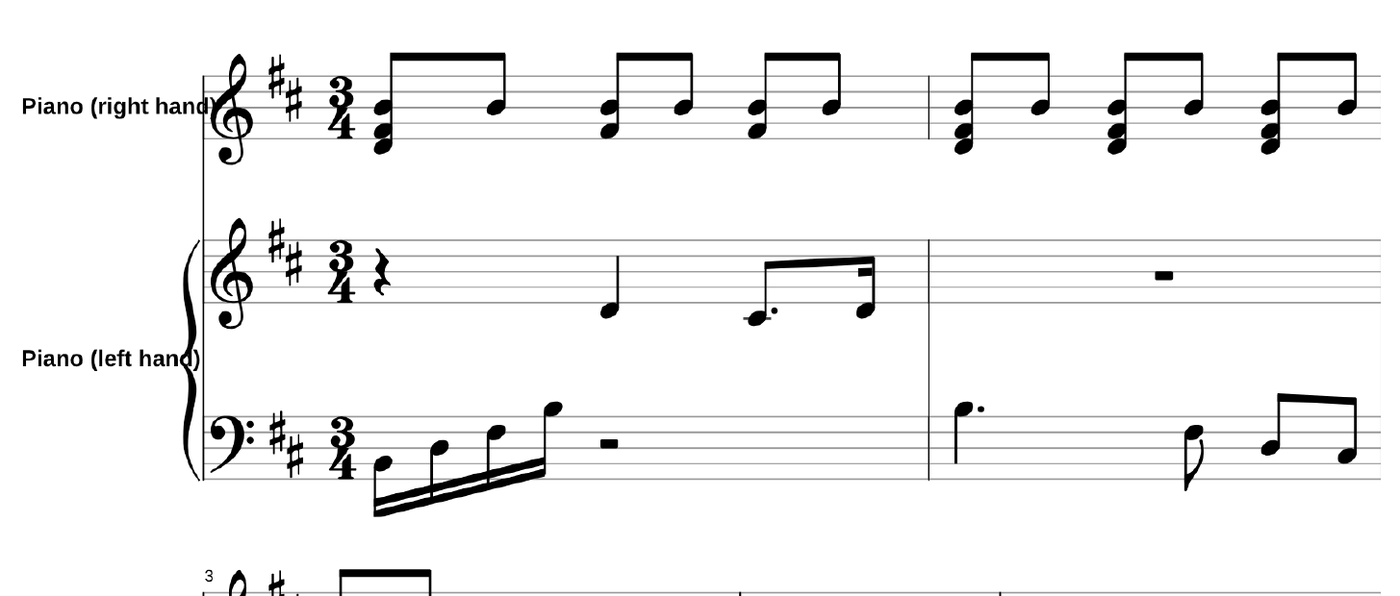
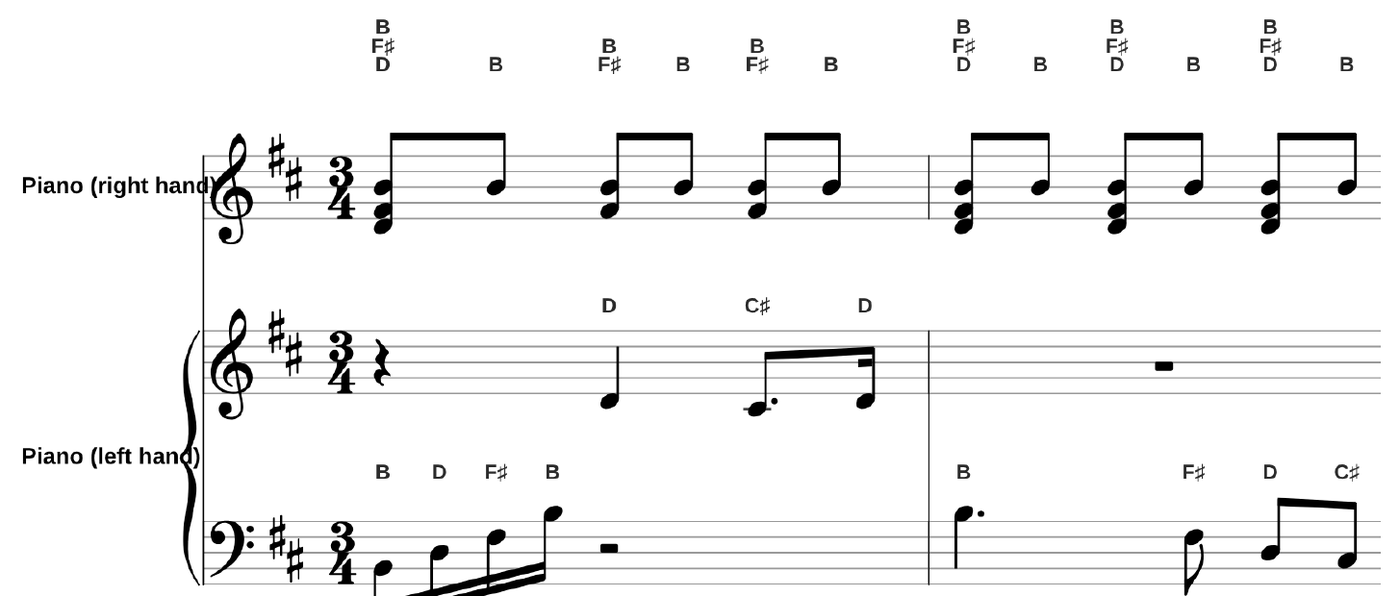
A way to use them that takes them away again:
- Read the note, then check the name. Look at where the note sits and say its name first. The printed name is the answer, not the question.
- One clef at a time. Most people read treble quickly and bass slowly. Keep the names while you play hands separately, and say the bass notes aloud.
- Print it again without them. Once a piece goes well, download the same file with names set to None: it is the same conversion, so it does not count again. Play from that copy and keep the named one beside you for checking.
- New piece, same routine. Each piece needs the names for less time than the one before.
6. Start simpler, if the page is too much
A full piano score is a lot of notes. Switch on Easier version on the converter and it prints the same piece with the tune one note at a time (the top of each chord) and one held bass note a beat, with the names if you want them. Learn that, then go back to the full score.
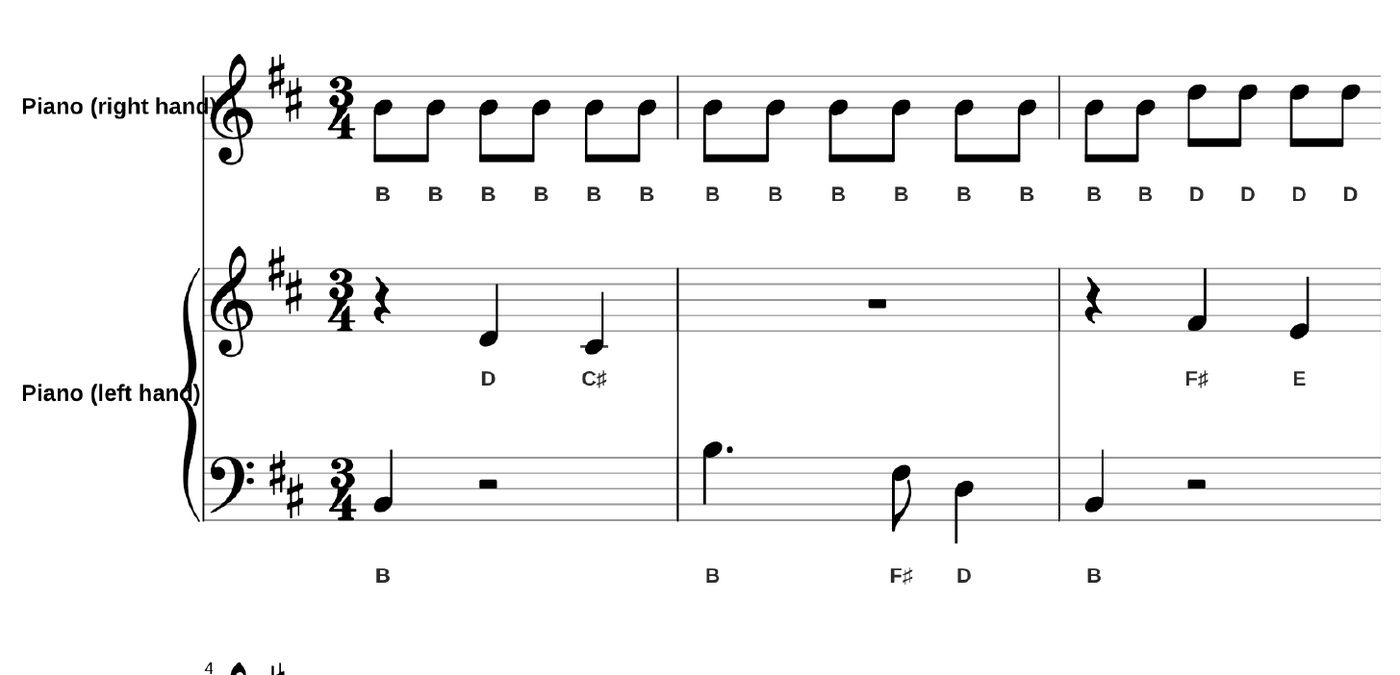
7. Guitarists: the staff over the tab
Tab tells you the fret, not the note, which is why many guitarists never learn to read. A Guitar Pro file prints as standard notation over the tab, and with the names under the notes you see all three together: where the note is written, what it is called and where it is on the neck.
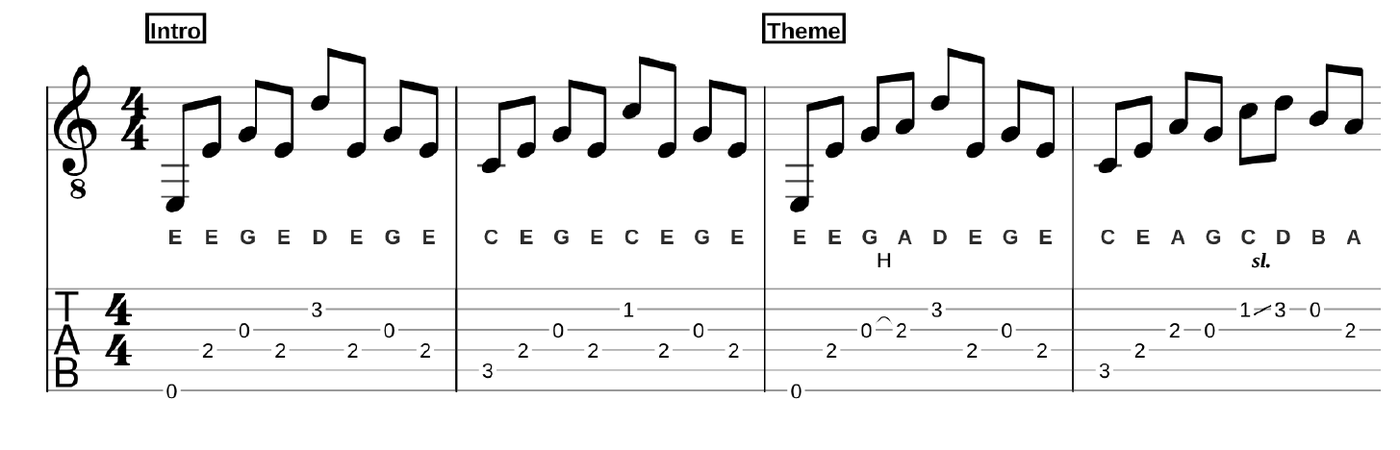
8. Hear it and see it: practise with falling notes
Reading is easier when you know how the music should sound. From the same converter page, Practise it opens the piece in the practice room: the notes fall onto a keyboard, with their names on them if you like, and you can slow it down, loop a bar and play each hand alone. Or make a falling-notes video of it to watch and share, no recording needed.
Print any score with the note names over or under it
Pick what you have. Note names are already set to under the notes; change them to over, or switch on the easier version, before you download.
Free, 3 files a day, no account. Your file is read in your browser and never uploaded.